Repair vs. replace: appliances, HVAC, and roofs
The furnace dies in January — fix it again or replace it? Use the 50% rule, expected lifespans, warranty status, and tax treatment to make the call with confidence.
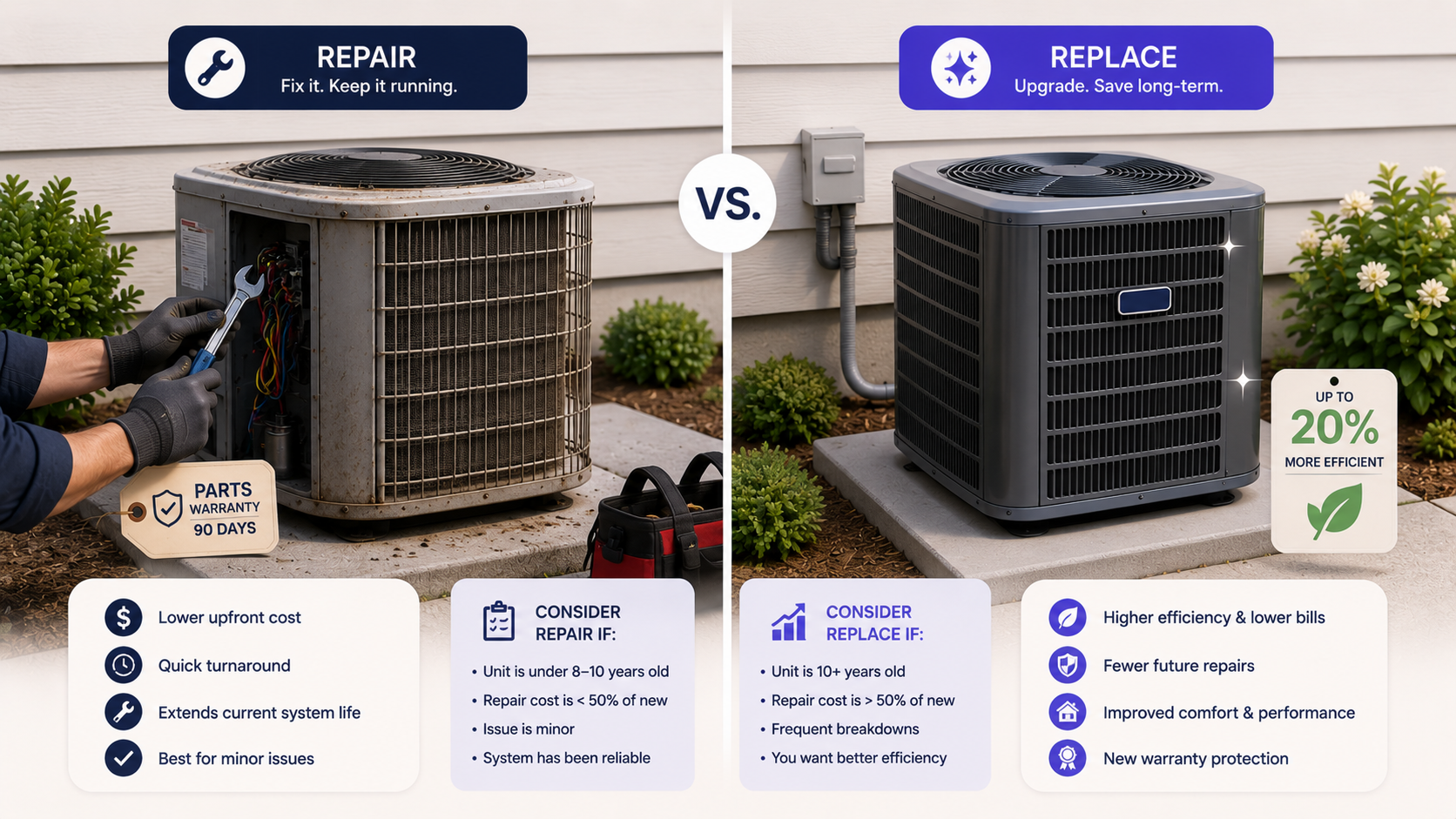
Every landlord faces it eventually: an appliance or system fails, and you have to decide on the spot whether to patch it one more time or replace it. A few simple rules turn that stressful call into a quick, defensible decision.
The 50% rule
The classic starting point: if a repair costs more than 50% of the replacement price — and the item is already past half its expected life — replace it. If it's cheaper than that and the unit is relatively young, repair it.
Expected lifespans (rules of thumb)
- Water heater: 8–12 years
- Furnace: 15–20 years · Central AC: 10–15 years
- Refrigerator: 10–13 · Range/oven: 13–15 · Dishwasher: 9–12
- Asphalt-shingle roof: 20–25 years
Compare the item's age to this range before you spend a dollar.
Factors beyond the sticker price
- Repair history — a first repair is normal; a third repair on the same unit is a replace signal
- Energy efficiency — a new HVAC or water heater cuts operating cost and is a genuine selling point
- Warranty status — a covered repair changes the math entirely (more on that below)
- Downtime and habitability — no heat or hot water is an emergency; fix fast, decide on the permanent solution after
- Tax treatment — a repair is usually deductible immediately, while a replacement is a capital improvement you depreciate over years. That affects your after-tax cost (see landlord accounting basics)
HVAC: the highest-stakes call
Heating and cooling is where repair-vs-replace hits hardest — the repairs are expensive and the failures are urgent. A 16-year-old AC that needs a $1,200 compressor is almost always a replace; a 4-year-old unit with a bad capacitor is an easy repair. The deciding facts are the unit's age, its service history, and whether it's still under warranty.
You can't decide well without records
Here's the problem: most landlords can't answer "how old is this furnace, is it under warranty, and how many times have we fixed it?" — so they guess. TenantPilot's asset, warranty & periodic maintenance logs every appliance, HVAC unit, and roof with its install date, warranty expiration, and full service history, and schedules the preventive maintenance — filter changes, tune-ups, inspections — that extends their life. When something breaks, you open the asset and instantly see whether it's under warranty and how many times you've already repaired it, so the repair-vs-replace decision makes itself. Pair it with a preventive maintenance schedule to avoid the January emergency in the first place.