Allowing pets vs. no pets: the actual ROI
A no-pet policy shrinks your applicant pool dramatically. Here's the real math on pet rent, vacancy, and turnover — and the guardrails that make pets pay.
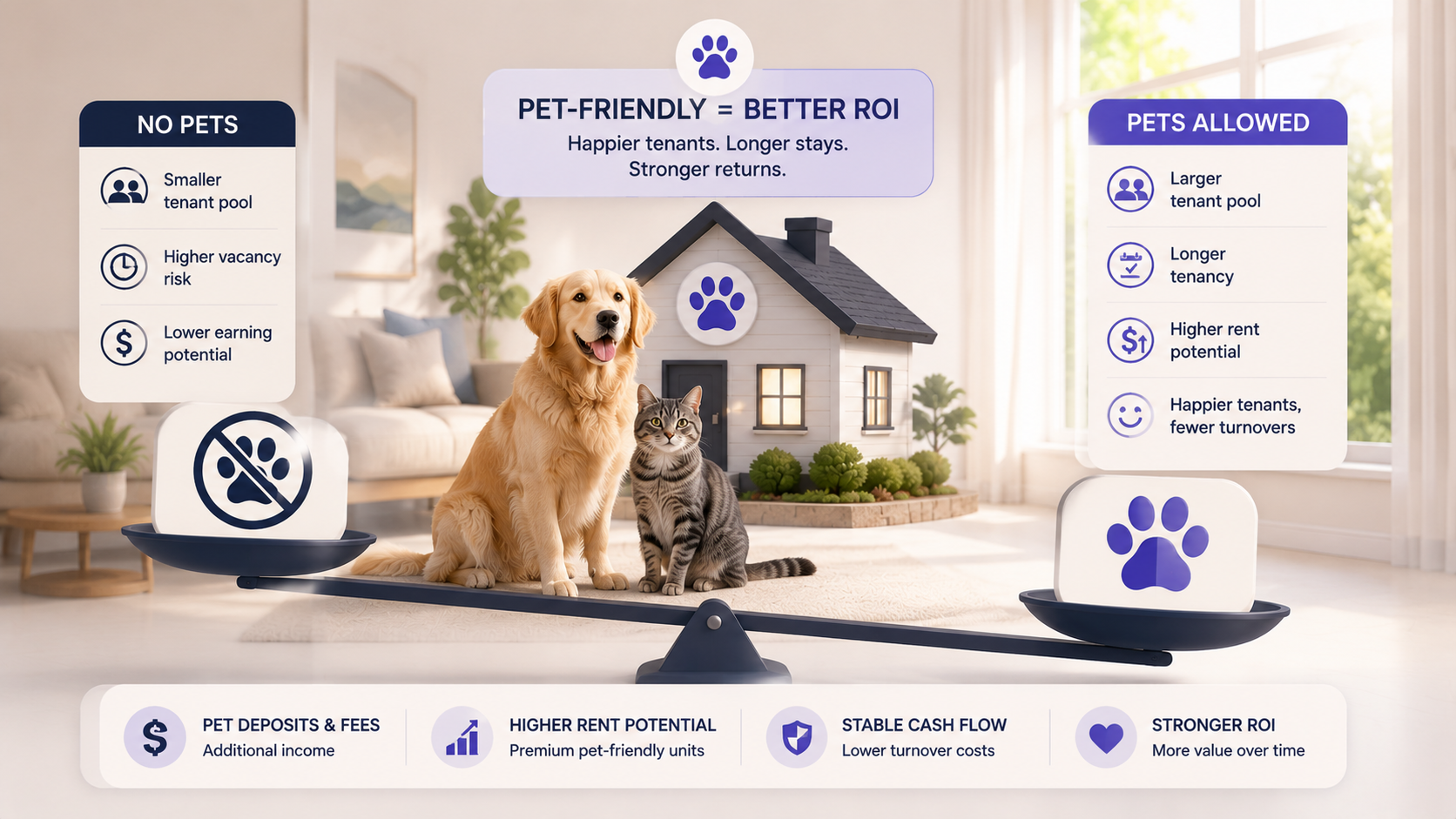
Pets feel like pure risk to a lot of landlords, so the instinct is to ban them. But a no-pet policy quietly cuts your applicant pool in half — and the numbers often favor allowing pets, as long as you put the right guardrails in place.
The case for allowing pets
- A much bigger applicant pool — roughly two-thirds of U.S. households have a pet, so "no pets" rules out a huge share of renters
- Faster leasing and lower vacancy — pet-friendly units are harder to find, so they rent quicker
- Longer tenancies — pet owners know how hard it is to find pet-friendly housing, so they stay put
- Extra income — pet rent ($25–50/month per pet) and a pet deposit or fee. At $35/month, that's $420 a year per pet, and it compounds across a portfolio
The case against — and the real risks
- Potential damage beyond the deposit
- Noise and allergy complaints from neighbors
- Liability, especially with dogs — check your insurance and any breed restrictions
Guardrails that make pets pay
- Use a pet addendum that defines the number, size, and type of pets and the tenant's responsibilities
- Charge recurring pet rent rather than only a one-time fee — a monthly charge offsets ongoing risk far better than a single payment
- Screen the pet and require renters insurance with liability coverage
- Document condition at move-in so any damage claim holds up
A critical legal note: service animals and assistance animals are not pets under fair-housing law. You generally cannot refuse them, charge pet rent, or apply pet deposits to them — even in a "no-pet" building. When in doubt, get advice.
The middle path
Not all-or-nothing: many owners allow pets case-by-case, with weight or number limits, in specific units, subject to screening.
Make pets easy to manage
Allowing pets only pays off if you actually collect the pet rent and paper it correctly. Add a pet addendum from the free landlord forms library, and let TenantPilot charge recurring pet rent right alongside base rent, keep the pet on the lease record, and store the signed addendum with the file. Screen every applicant — pets included — with the same consistent process you'd use for tenant screening.