LLC vs. personal ownership for rental property: which is right for you?
Liability protection, financing, taxes, and paperwork — an honest comparison of holding rentals in an LLC versus in your own name, plus a simple rule of thumb.
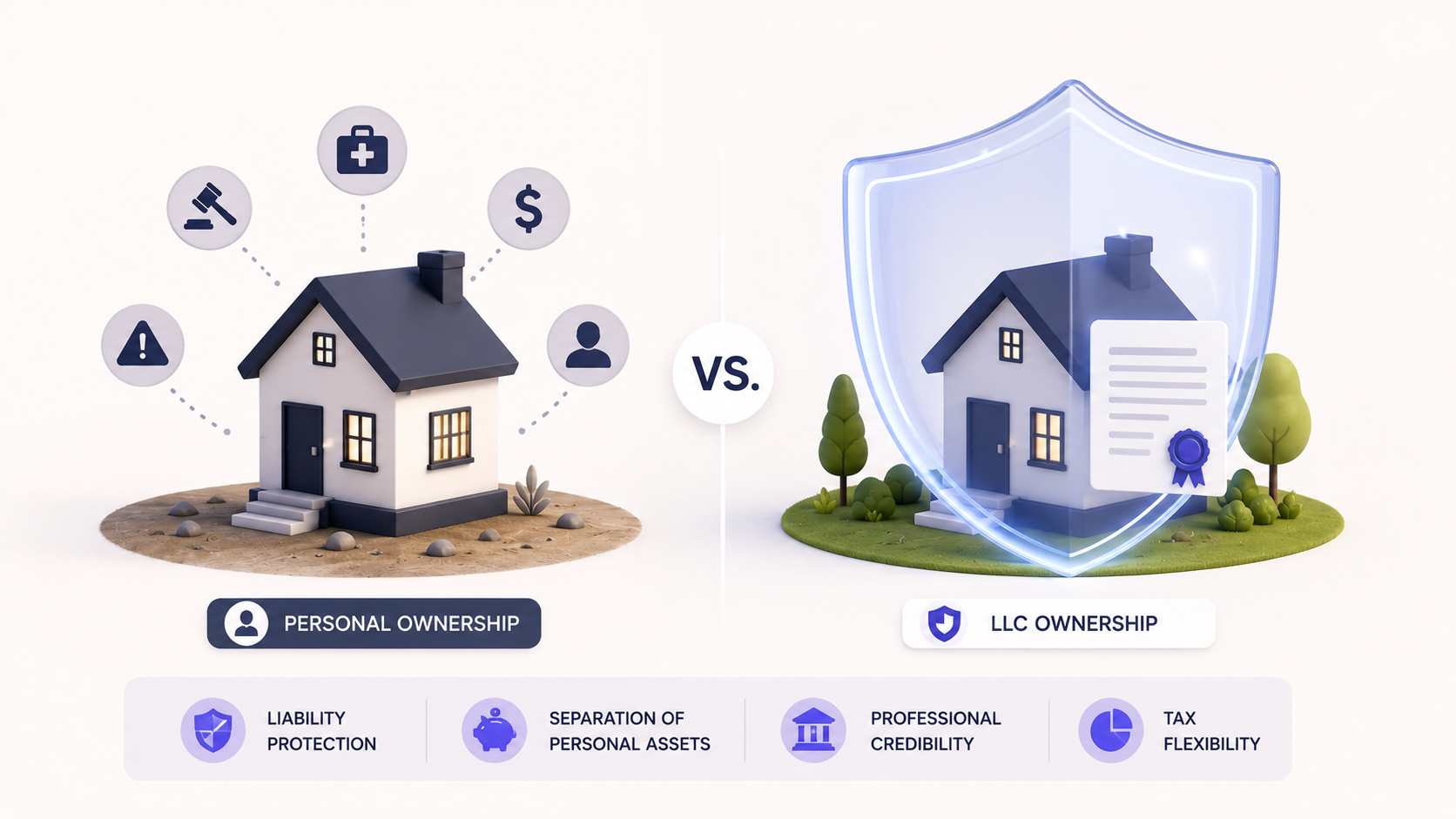
It's one of the first questions every landlord asks: should you buy and hold a rental in your own name, or set up an LLC? Both work. The right answer depends on your liability exposure, how you finance deals, and how many doors you own.
What personal ownership looks like
Holding property in your own name is the simplest and cheapest path.
- No formation paperwork and no annual state fees
- Easier, cheaper financing — conventional mortgages are written for individuals
- Income and expenses flow straight to your personal return (Schedule E)
The catch is liability. If a tenant or visitor is injured and sues, your personal assets — savings, your home, other property — are potentially exposed.
What an LLC gives you
An LLC (limited liability company) puts a legal wall between you and the rental.
- Liability protection — a claim against the property generally can't reach your personal assets, if you keep the entity clean
- Privacy — the property is held in the company's name
- Partner flexibility — an operating agreement defines ownership splits and decisions
The trade-offs: formation and annual fees (some states, like California, add a franchise tax), potentially higher mortgage rates or the hassle of the "due-on-sale" clause if you transfer a financed property, and more administrative work.
The tax picture is mostly a wash
A common myth is that an LLC saves taxes. For most small landlords it doesn't. A single-member LLC is a "disregarded entity" — the IRS taxes it exactly like personal ownership. The real tax levers — depreciation, deductible expenses, and the qualified business income deduction — are available either way.
This isn't legal or tax advice — structures and state rules vary, so run your situation by a CPA and an attorney.
A practical rule of thumb
- One property, modest equity: personal ownership is often fine — paired with a solid landlord policy and an umbrella insurance policy for extra liability coverage.
- Multiple properties or significant equity: an LLC (sometimes one per property) to compartmentalize risk so a problem at one door can't sink the others.
- Either way, umbrella insurance is a cheap first layer of protection and worth pricing out.
The entity only protects you if your books are clean
Here's the part landlords miss: an LLC protects you only if you treat it like a real, separate business. Commingle personal and rental money and a court can "pierce the veil," erasing the protection you paid for. That means a separate bank account per entity and clean, per-property records.
That's exactly what TenantPilot's built-in accounting is built for — a separate ledger and owner P&L for each property, so every entity's books stay clean, separate, and audit-ready without a year-end scramble. If you're still running rentals out of a spreadsheet, start with landlord accounting basics.