Fixed-term vs. month-to-month lease: which is better?
The lease term shapes your cash flow, flexibility, and turnover. Here's when a 12-month lease wins, when month-to-month is smarter, and the hybrid most owners should use.
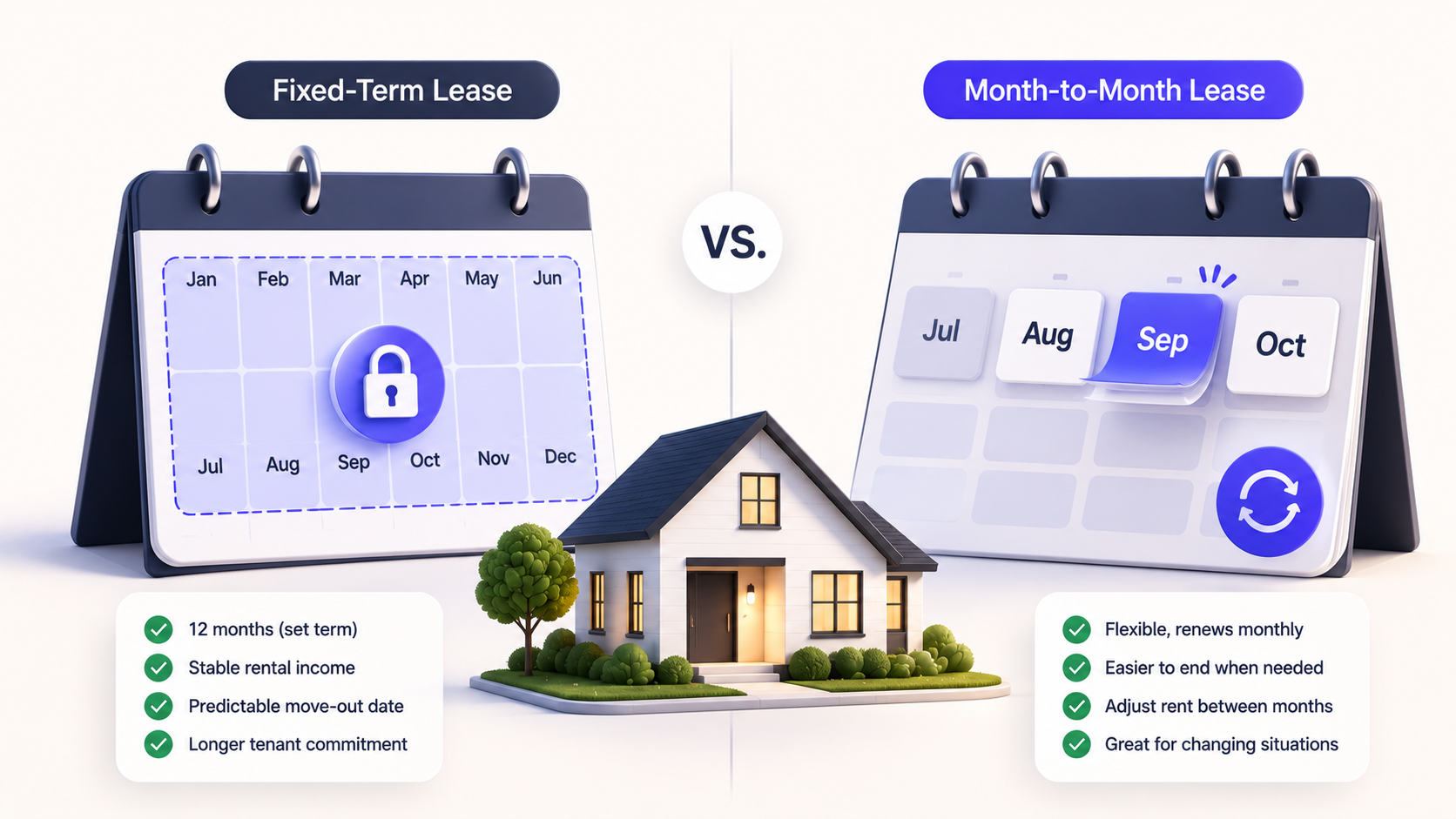
The length of your lease is one of the most consequential decisions you'll make as a landlord. It sets your cash-flow predictability, how quickly you can adjust rent, and how much turnover you'll manage. Here's how the two options compare.
Fixed-term leases (usually 12 months)
A fixed-term lease locks both parties in for a set period.
- Predictable income — you know the rent and the term up front
- Rate lock — the rent is fixed for the whole term, protecting the tenant from increases and you from second-guessing
- Stability — harder for a tenant to leave early without penalty
The downside: you also can't easily change the rent or end the tenancy mid-term, and you take on a renewal cycle at the end.
Month-to-month leases
A month-to-month agreement renews automatically each month until either party gives notice.
- Flexibility — raise rent or end the tenancy with proper notice
- Great for uncertainty — ideal if you might sell, renovate, or move into the unit
- Easy tenant testing — a low-commitment start with a new renter
The cost is predictability: income is less certain, turnover risk is higher, and vacancies can pop up with little warning.
When to use which
- Stable long-term hold with a good tenant: fixed-term, typically 12 months.
- Planning to sell, renovate, or move in soon: month-to-month.
- The hybrid most owners should use: start with a 12-month lease, then let it convert to month-to-month at expiration — often at a small premium. You get the stability of a fixed term up front and flexibility afterward.
Watch your state's notice and rent-increase rules
Month-to-month notice periods (commonly 30 or 60 days) and required rent-increase notice vary by state — and some cities add their own rules. Look up your state's lease laws before you set a term, and use the rent increase notice generator when it's time to raise rent.
The hidden cost of leases: the renewal cycle
Fixed-term leases have a quiet risk — expirations that sneak up on you, lapse into an accidental month-to-month, or turn into a surprise vacancy. TenantPilot's lease management tracks every lease's term, sends expiration alerts before it lapses, and lets you renew, e-sign, or convert to month-to-month with rent escalations applied automatically. Draft either type in minutes from the free lease agreement builder.