Furnished vs. unfurnished rentals: which earns more?
Furnishing can push rent up 15–30% — but it changes your tenant pool, turnover, and workload. Here's how to run the math and decide for your market.
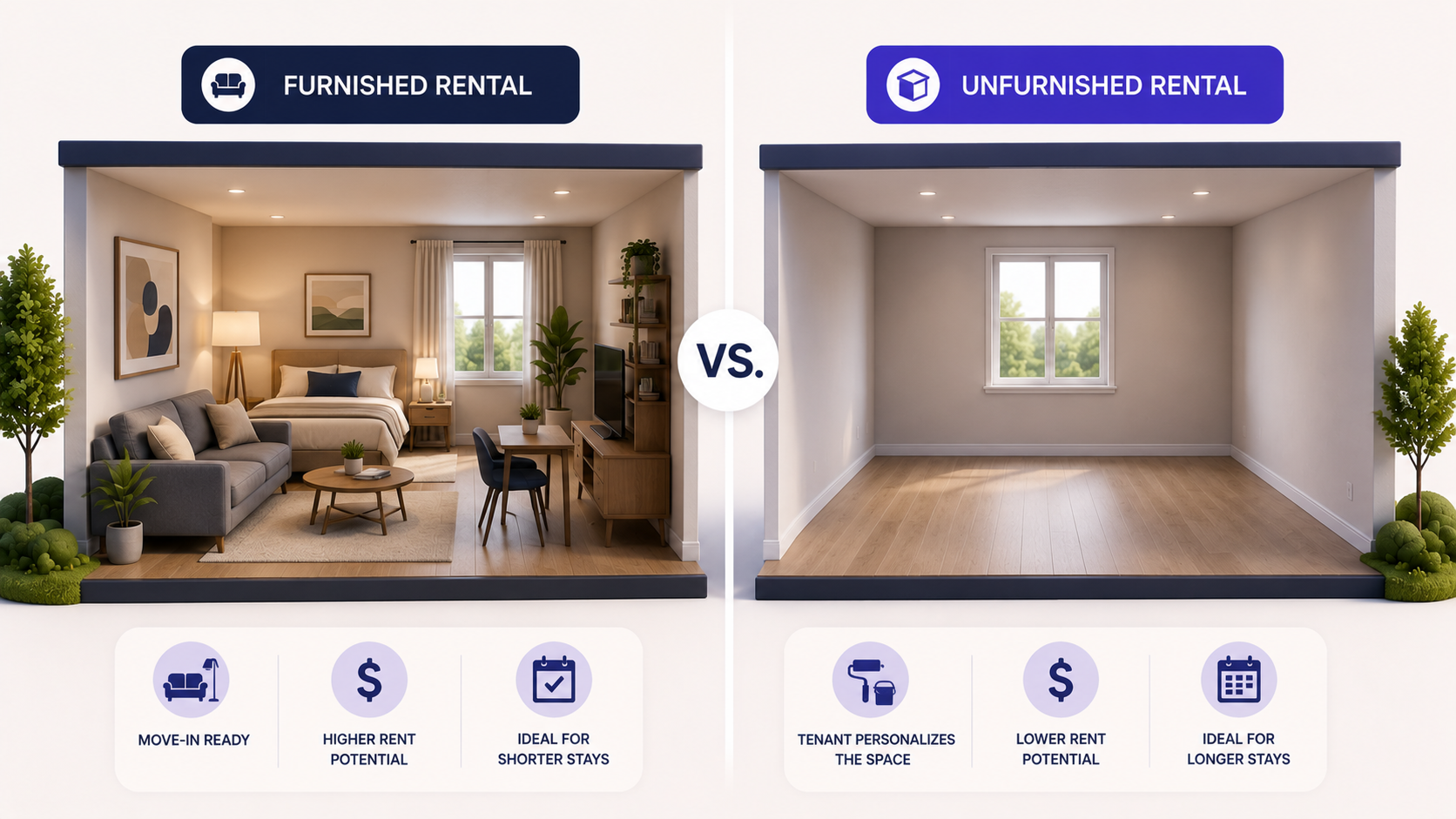
A furnished rental can command noticeably higher rent — but that premium comes with more turnover, more to maintain, and a different kind of tenant. Here's how the two stack up and how to decide.
Unfurnished: the low-effort default
Most long-term rentals are unfurnished, and for good reason.
- Longer tenancies and lower turnover — people who bring their own furniture tend to stay
- Less to maintain and replace — you're not on the hook for a couch or a bed
- Simpler operations — one less category of stuff to track and inspect
The trade-off is a lower rent ceiling; you're competing largely on price and location.
Furnished: higher rent, higher effort
A furnished unit can rent for roughly 15–30% more, and sometimes far more in the right market.
- Premium rent and access to renters who'll pay it
- Attracts corporate, traveling professionals, students, and mid-term renters — often paired with shorter lease terms
- Pairs well with mid-term (1–6 month) strategies in the right location
The costs: faster wear and tear, furniture you'll periodically replace, more frequent move-ins and move-outs, an inventory to track, and potential vacancy between shorter stays.
Run the math before you buy a couch
Furnished only wins if the rent premium beats the added costs: furniture depreciation, faster replacement, higher turnover, and any vacancy between tenants. In corporate-, student-, or tourist-heavy areas, that math often works. In stable family markets, unfurnished usually comes out ahead.
A middle path — semi-furnished (appliances plus a few essentials) — can capture some premium with less exposure. In some markets, appliances are simply expected.
Track what you own (and what it's worth)
A furnished unit adds a pile of assets you're responsible for — and that depreciate. TenantPilot's asset tracking logs each appliance and furnishing with its purchase date, warranty, and condition, so you know what to replace and when, while the built-in accounting captures depreciation for tax time. Protect the deposit, too: document everything with a move-in/move-out inventory so any damage claim holds up — the same discipline that keeps security deposits out of small-claims court.